

Introduction
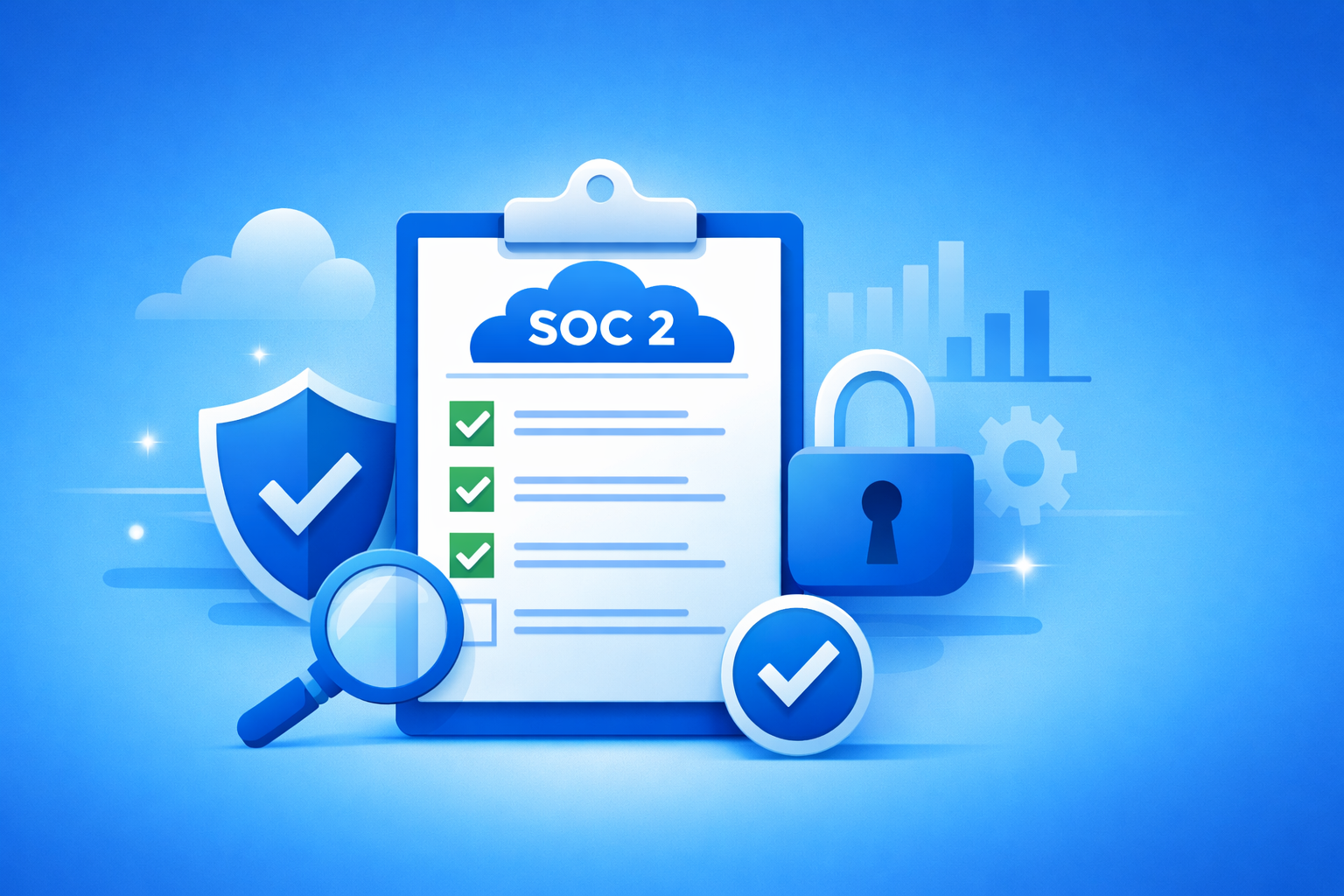
SOC 2 used to be a milestone. You prepared for it once, passed the audit, and moved on. That mindset no longer holds up.
In 2026, SOC 2 has become a standing signal of how seriously an organization treats security, access, and operational discipline. Buyers read it closely. Auditors dig deeper. And security teams feel the strain when controls exist on paper but not in practice. We see this shift clearly in conversations with CTOs and security leaders. Many teams are not failing SOC 2 because they lack tools. They struggle because their controls do not reflect how work happens across users, systems, and access paths.
This guide breaks SOC 2 down into what it really is today: a test of how well your organization manages identity, access, and accountability at scale. We will walk through what has changed, what auditors now focus on, and how to approach SOC 2 as an ongoing operating model rather than a one-time event.
What SOC 2 Really Measures Today?
At its core, SOC 2 measures trust. Not trust as a promise, but trust as something proven through consistent behavior across systems and people. The framework evaluates whether your controls are designed well and whether they operate the way you claim they do. Auditors look for alignment between policy, system behavior, and evidence. When those three drift apart, findings follow.
SOC 2 does not ask if you have security policies. It asks whether your organization can show, repeatedly, that access is intentional, monitored, and corrected when it goes wrong. This is why SOC 2 often surfaces uncomfortable truths. Teams discover that access decisions live in too many places. Manual processes break quietly. Ownership blurs. The audit simply exposes what daily operations already reveal.
SOC 2 in 2026: What has Changed?
Several things have shifted over the last few years. Auditors now place more weight on identity lifecycle controls. They want to see how users join, change roles, and leave. They care about contractors, vendors, and temporary access, not just full-time employees.
Evidence expectations have also matured. Screenshots and ad-hoc explanations carry less weight than system-generated logs and consistent records. Auditors want to trace actions over time, not just confirm that a setting exists. We also see growing skepticism toward point-in-time compliance. Teams that pass Type I audits but cannot sustain controls often struggle during Type II reviews. The gap between intention and operation becomes visible when months of evidence come under scrutiny.
Understanding the Trust Services Criteria
The Trust Services Criteria form the backbone of SOC 2. While Security remains mandatory, the other criteria increasingly matter as systems grow more complex.
Security focuses on access control, monitoring, and incident response. Availability looks at whether systems stay reliable and recover when they fail. Confidentiality addresses how sensitive data is protected and restricted. Processing Integrity ensures systems work as intended without silent failures. Privacy governs how personal data is handled and respected. Across all five, identity acts as connective tissue. Every criterion relies on knowing who accessed what, why they had access, and whether that access made sense at the time.
SOC 2 Type I vs Type II: Choosing with Intent
Type I audits evaluate whether controls are designed properly at a specific point in time. Type II audits examine whether those controls operate effectively over a defined period.
We often see teams treat Type I as a shortcut. It can be a valid starting point, especially for early-stage companies. But it should not be mistaken for proof of operational maturity.
Type II audits demand consistency. They reveal access drift, manual exceptions, and processes that work only when someone remembers to run them. Identity gaps that stay hidden during Type I audits tend to surface quickly during Type II. Choosing between the two should reflect your operational readiness, not just your timeline pressure.
Pre-SOC 2 Readiness: Getting the Foundation Right
Before involving an auditor, teams need clarity on scope, identity flows, and risk concentration.
Scope defines which systems, users, and environments fall under audit. Over-scoping introduces unnecessary work. Under-scoping creates credibility issues. Auditors expect the scope to reflect reality, not convenience.
Identity mapping matters just as much. Teams should understand where access originates, how it changes, and where exceptions live. This includes service accounts, admin privileges, and emergency access paths.
High-risk scenarios deserve early attention. Shared credentials, long-lived access, and unmanaged contractors frequently become audit pain points. Addressing them early saves time and friction later.
The Core SOC 2 Compliance Checklist
This is where most teams focus their effort, and where most problems surface. These controls must work daily, not just during audit week.
Key operational areas include:
- User provisioning and deprovisioning processes that trigger automatically and reliably
- Role design that reflects actual job responsibilities, not titles
- Enforcement of least privilege without blocking productivity
- Clear ownership of privileged access and escalation paths
- Strong authentication that aligns with risk, not convenience
- Session controls that reduce misuse without disrupting workflows
Auditors look for consistency here. They expect access changes to follow defined paths, produce evidence, and leave an audit trail that holds up months later.
Evidence Collection: Where Teams Lose Time
Evidence collection often becomes the most stressful phase of SOC 2. Not because teams lack controls, but because proof lives in fragments.
Auditors want durable evidence. Logs that show who accessed a system, when they did so, and how that access was granted. They want records that align with policies and stay consistent across the audit window.
Manual screenshots fade quickly. They fail to show continuity. System-generated records, on the other hand, tell a story over time. They reduce interpretation and increase confidence.
Teams that think about evidence while designing controls move faster and with less anxiety. Those who treat evidence as an afterthought scramble under pressure.
The Audit Phase: What Auditors Actually Test
Auditors validate both design and operation. They check whether controls make sense and whether they run as described.
They sample access events. They trace lifecycle changes. They ask follow-up questions when evidence conflicts. Identity controls receive special attention because they influence every other domain.
Findings often stem from gaps between policy and practice. A process that works only when someone remembers to run it rarely survives scrutiny. Consistency matters more than perfection.
Post-Audit Reality: Compliance Decays
Passing an audit does not freeze your environment. Teams change. Systems evolve. Access expands quietly.
Without ongoing oversight, role sprawl sets in. Temporary access becomes permanent. New integrations introduce new risks. The next audit then feels harder than the last.
Sustainable SOC 2 programs treat compliance as continuous hygiene. They monitor access drift, review changes regularly, and adjust controls as systems grow.
Common SOC 2 Pitfalls We See Repeatedly
Many teams stumble over the same issues:
- Treating identity as a setup task rather than a living system
- Relying on manual access reviews that do not scale
- Ignoring non-human identities and service accounts
- Assuming MFA alone solves access risk
These mistakes do not come from negligence. They come from underestimating how quickly access complexity grows.
Why Identity-First Thinking Strengthens SOC 2
Identity touches every Trust Services Criterion. It governs who can act, what they can see, and how accountability flows.
When access decisions stay centralized and explainable, audits become simpler. Evidence becomes clearer. Teams spend less time justifying exceptions and more time improving controls.
Identity-first approaches also reduce friction. When systems enforce intent automatically, people do not need to remember policies. The environment does the right thing by default.
SOC 2 Checklist Summary for Leaders
For teams preparing for SOC 2 in 2026, three principles matter:
- Design controls that reflect how work really happens
- Build evidence into systems, not into spreadsheets
- Treat identity as the backbone of compliance
SOC 2 no longer rewards surface-level readiness. It rewards organizations that understand their access patterns and manage them deliberately.
Final Thoughts
SOC 2 has matured into a signal of operational trust. It reflects whether security practices hold up under real conditions, not just audit pressure.
Teams that succeed approach SOC 2 as an ongoing discipline. They invest early in clarity, consistency, and identity control. The audit then becomes confirmation, not confrontation. That shift in mindset makes all the difference.
FAQs
Is SOC 2 still worth it in 2026?
Yes, but only if you treat it as an operating discipline, not a checkbox. Buyers and auditors now look past the report and expect proof that your controls actually work day to day.
What do auditors focus on most during a SOC 2 audit?
Identity and access. Who got access, why they had it, how it changed, and whether anyone was watching. If that story is messy, everything else unravels fast.
Can a company pass SOC 2 without sophisticated tools?
Technically, yes. Practically, it gets painful very quickly. Manual processes break under growth, and auditors can spot duct-taped controls from a mile away.
Why do teams fail SOC 2 Type II after passing Type I?
Because good intentions do not survive time. Type II exposes access drift, forgotten exceptions, and controls that only worked during audit week.