

Every IT leader we talk to says the same thing: “We’re tired of chasing passwords.”
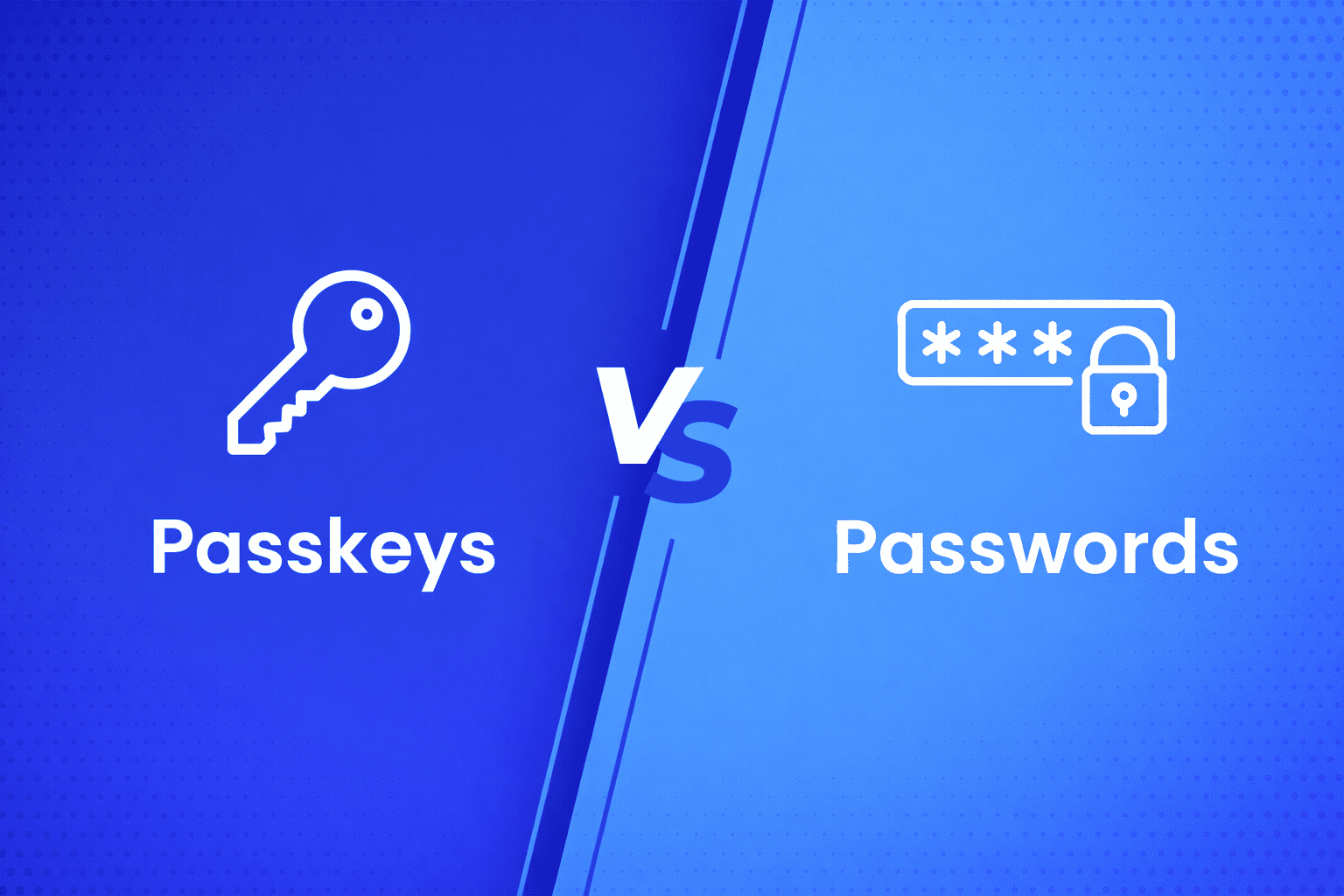
Finance teams reset them daily. Doctors forget them mid-shift. Factory workers write them on post-it notes. When teams started comparing passkey vs password approaches, it became painfully clear that passwords were once the gatekeepers of digital trust, but today, they’re slowing everyone down. Across industries, the conversation has shifted from “How do we secure passwords?” to “How do we move beyond them?” That’s where passkeys enter the story, as a real-world solution that changes how people log in, work, and protect data.
This article isn’t a simple feature comparison. It’s a look at how finance, healthcare, education, retail, and manufacturing are moving from passwords to passkeys, and what they’re learning along the way, especially as teams ask what is a passkey vs password and how this shift plays out in real operations.
Why Passwords are Failing Enterprises?
Passwords were built for a smaller internet. They worked when a few employees logged into a server once a day. Now, an average enterprise juggles hundreds of apps, thousands of users, and countless devices. That’s exactly why every discussion around passkey vs password ends with the same conclusion: traditional logins just can’t keep up. The result? A mess of credentials waiting to be compromised.
Recent research by Verizon DBIR 2025 found that 74% of breaches involve human error or password misuse. And according to Forrester, large enterprises spend over $1 million annually just handling password resets and related IT tickets. The password vs passkey debate usually ends right there for most security teams
The Rise of Passkeys
A Passkey replaces passwords with device-based, cryptographic authentication. It’s tied to the user’s device and verified using biometrics or a local PIN. No shared secrets, no chance for phishing. In almost every passkey vs password evaluation, this single difference becomes the deal-breaker.
Tech giants like Apple, Google, and Microsoft have all adopted Passkey support through the FIDO2 standard. When you log in, your device simply proves who you are without sending a password over the internet, making the entire passkeys vs passwords comparison feel almost unfair. But the real impact of passkeys isn’t in the technology itself. It’s in how they change behaviour, reduce risk, and create frictionless access across critical sectors.
Finance: From Credential Chaos to Customer Confidence
Financial institutions face constant credential attacks. Phishing, credential stuffing, and fake login pages still account for most fraud attempts. For example, JPMorgan Chase blocked over 45 billion credential-stuffing attempts in a single year. Here’s where passkeys change the game: they eliminate shared secrets entirely. When a customer or employee signs in using a passkey, there’s no password for hackers to steal. The authentication happens locally, using the device’s biometric sensor. Teams that once debated password vs passkey outcomes now see results instead of hypotheticals.
Healthcare: Protecting Lives, Not Just Logins
Clinicians often waste time resetting or retyping passwords. According to the Ponemon Institute, healthcare organizations spend an average of 11 minutes per login each day. Across a hospital, that’s millions in lost productivity. Passkeys change that instantly. Authorized clinicians access systems via biometrics using a secure, device-bound credential. Because the industry heavily evaluates what is a passkey vs password, the shift is driven by privacy needs as much as convenience. One major hospital network implemented AuthX passkey-based access for medication dispensing stations. Doctors logged in instantly using fingerprints; no shared accounts, no delays. Within weeks, they reported a 70% drop in authentication-related bottlenecks.
Education: Simplifying Access in Shared Environments
Schools deal with shared devices, forgotten passwords, and massive student turnover. Google Workspace for Education introduced passkey support to reduce these issues, and schools saw login success improve by 40%. University CIOs often ask their teams to look at passkeys vs passwords to understand the long-term benefits of simplicity.
Retail: Faster Checkouts, Fewer Abandoned Carts
In retail, slow logins directly hurt conversions. Around 19% of shoppers abandon carts due to credential friction. Passkeys remove that obstacle. Customers log in instantly using biometrics. Major retailers adopting passkeys report higher conversion and lower fraud; real proof in the ongoing industry conversation around passkey vs password trade-offs. Store associates benefit too. With shared terminals, passwords vs passkeys become a practical question, not a theoretical one. Passkeys speed up access, eliminate shared logins, and reduce shift-change chaos.
Manufacturing: Securing Distributed Workforces
In manufacturing, the challenge isn’t office workers; its technicians, engineers, and operators using shared or rugged devices on production floors. Many of these systems are connected to OT networks, which are high-value targets for ransomware. Passkeys bring security without slowing work. Technicians authenticate with fingerprints or wearables linked to their device. No typing, no exposure to phishing, and no risk of password reuse across systems. According to a FIDO Alliance survey, companies implementing passkeys in industrial environments reduced credential theft attempts by up to 92%.
How Enterprises Move from Passwords to Passkeys?
Transitioning to passkeys isn’t an overnight switch. It’s a phased journey that blends user experience, security architecture, and IT change management.
Here’s how most enterprises approach it:
- Start with pilot groups: Begin with one department (like IT or finance) to validate device compatibility and user response.
- Integrate with SSO and IAM: Use enterprise access management tools like AuthX to unify both password-based and passwordless logins.
- Educate users: Employees need to trust biometrics and understand how their data stays private.
- Expand gradually: Roll out to broader teams once confidence and metrics are strong.
- Decommission passwords: Once passkeys are stable, remove legacy password resets and related policies.
Every phase strengthens the case for passwords vs passkeys, especially when teams see how smooth the change feels in real workflows.
Why Are Passkeys Winning?
The beauty of passkeys lies in what they remove: passwords, phishing, fatigue. They align with Zero Trust and fit naturally into modern devices. That’s why teams comparing passkey vs password outcomes keep landing on the same conclusion. A security architect told us, “We stopped asking users to remember security. We built it into their devices instead.” And honestly, that’s the heart of every what is a passkey vs password discussion.
How AuthX Helps You Get There?
At AuthX, we’ve helped enterprises across finance, healthcare, and manufacturing move beyond passwords with Passwordless authentication that combines Passkeys, Biometrics, and Adaptive MFA. AuthX integrates directly with your existing IAM and SSO systems, offering a unified dashboard to manage users, policies, and device-level visibility. Our platform ensures credentials never leave the device, keeping user identity protected and compliant with regulations like GDPR and HIPAA. One line we often repeat internally: “We don’t just remove passwords, we remove friction.” The passkeys vs passwords debate ends quickly once people experience it in action.
Key Takeaway
Passwords had a long run. But in 2025, the shift toward passkeys is no longer a question; it’s a timeline. Enterprises adopting passkeys are seeing faster logins, fewer breaches, and stronger compliance. If you’ve ever wondered what a passkey vs password is or compared password and passkey in your security planning, the results are finally clear. The future of access isn’t about remembering secrets. It’s about technology recognizing you.
Ready to make the shift? Book a demo and explore how AuthX helps your enterprise move beyond passwords securely, seamlessly, and confidently.
FAQs
What is the difference between a passkey and a password?
A password is a shared secret that attackers can steal or guess, while a passkey is a device-bound cryptographic credential verified using biometrics. Passkeys remove phishing and credential theft entirely.
Are passkeys more secure than passwords?
Yes. Passkeys can’t be phished, reused, or exposed in breaches because nothing is typed or transmitted. They authenticate locally on the user’s device using cryptographic challenges.
Can enterprises use passkeys with existing IAM or SSO systems?
Absolutely. Modern CIAM and IAM platforms support mixed deployments where passkeys and passwords coexist during transition. Most organizations start with pilots and gradually expand.